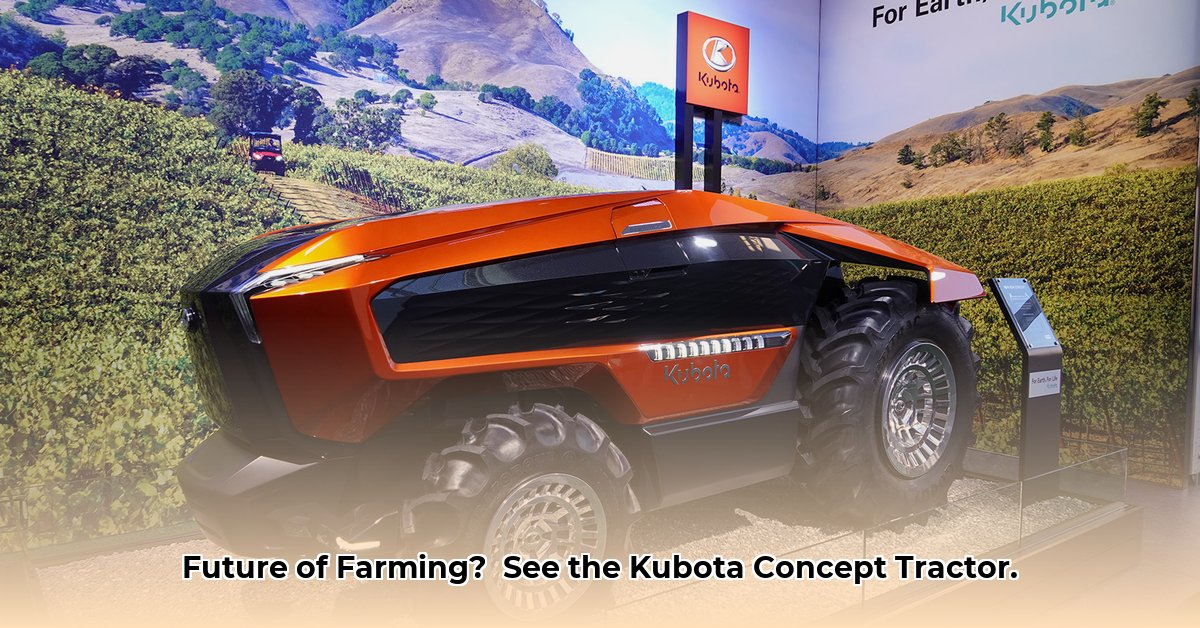
The agricultural landscape is undergoing a seismic shift. Labor shortages, environmental concerns, and the ever-increasing demand for food are pushing the industry towards innovative solutions. Enter Kubota's concept tractor, not just an upgraded machine, but a potential revolution in sustainable farming. This isn't simply about a new tractor; it's a holistic approach to addressing critical challenges in agriculture and building a more resilient and eco-friendly food system. Learn more about Kubota's manufacturing process by visiting Kubota manufacturing.
The Tech Under the Hood: A Smart, Sustainable Powerhouse
Forget the image of noisy, polluting diesel engines. Kubota's concept tractor is fully electric, powered by a robust lithium-ion battery system supplemented by integrated solar panels. This translates to cleaner air on farms and in surrounding communities, significantly reducing the environmental footprint of agriculture - a crucial step toward a greener future. Beyond its clean energy source, the tractor's true innovation lies in its "brain"—the onboard artificial intelligence (AI). This AI acts as the tractor's intelligent control system, guiding its autonomous operation with precision. It can autonomously plow fields, plant seeds, and spray crops, all while expertly navigating obstacles and optimizing processes for maximum efficiency. The tractor's design itself is robust, featuring an adjustable-height chassis capable of handling uneven terrain.
How will this impact farmers? Will this advanced technology truly change the workload and efficiency of smaller farms?
A Greener Future: Environmental Benefits and Sustainability
The environmental benefits of Kubota's concept tractor extend far beyond reduced emissions and cleaner air. The increased fuel efficiency compared to traditional tractors dramatically reduces operational costs for farmers while minimizing their environmental impact. But it's more than just operational efficiency. The precision offered by the AI-guided system minimizes waste, optimizing resource use and reducing chemical inputs, such as fertilizers and pesticides. This leads to healthier soil, reduced water consumption, and a more environmentally sustainable approach to food production. These sustainable practices contribute to a broader ecosystem benefit, protecting biodiversity and contributing to a healthier planet. This isn't just about a cleaner tractor; it's about a cleaner, more sustainable agricultural system.
Social Agri: Transforming Farming and Revitalizing Communities
Kubota's vision goes beyond simply creating a technologically advanced machine; it aims to foster a “Social Agri” movement, recognizing the tractor's potential to improve the lives of farmers and the surrounding communities. By automating many of the strenuous and physically demanding tasks, this tractor reduces the risk of injuries and improves the overall well-being of farmworkers. The increased efficiency also translates to improved profitability, potentially revitalizing agricultural economies and attracting a younger generation to farming. Imagine a future where farming is more appealing, less physically taxing, and more financially rewarding—this tractor represents a significant step toward that possibility. "This tractor isn't just about technology; it's about people," says Dr. Emily Carter, Agricultural Economist at Cornell University. "It's about improving lives and building strong, sustainable farming communities."
Challenges and Barriers: Navigating the Path to Adoption
Despite the significant potential, several challenges remain before widespread adoption of this revolutionary technology. The initial cost of the tractor is likely to be substantial, potentially limiting access for smaller farms. Regulatory hurdles related to autonomous operation and data privacy are significant, requiring collaboration between manufacturers, regulators, and policymakers. Farmer acceptance and the need for comprehensive training programs are equally crucial for successful implementation. Data security is paramount. How can we ensure that sensitive farm data remains protected?
Overcoming Obstacles: A Collaborative Approach
Kubota recognizes these challenges and is working towards solutions through a multifaceted, collaborative approach:
- Pilot Programs: Real-world testing and feedback are crucial to refine the technology and demonstrate its benefits.
- Comprehensive Training: Intensive training is imperative to ensure farmers can safely and effectively use the tractor's advanced features.
- Robust Data Security Protocols: Implementing rigorous security measures to protect sensitive farm data and address privacy concerns is paramount.
- Regulatory Engagement: Active collaboration with regulatory bodies to ensure compliance and address safety concerns is essential.
- Financial Incentives and Support: Exploring options for subsidies and financing to make the technology more accessible to smaller farms is needed.
The Future Outlook: A Sustainable Vision for Agriculture
Kubota's concept tractor is more than just a technological advancement; it's a vision for a more sustainable and equitable future for agriculture. While challenges remain, the potential benefits are substantial. By addressing those challenges through collaborative efforts and continued innovation, we can pave the way for a future where farming is more efficient, sustainable, and rewarding for both farmers and consumers. This is not simply technological progress; it's a step toward a more secure and sustainable food system for all. The future of agriculture is being built today, and it is a promising one.